ABOUT.
My work is driven by a long-standing interest in algorithmic thinking and how intelligent systems can be designed to engage with humans in ways that are adaptive, interpretable, and meaningfully supportive rather than prescriptive or opaque.
Across my research and applied work, I focus on building systems that operate in complex human environments where cognition, emotion, context, and social interaction all matter. I am particularly interested in personalization as a dynamic process: how systems can learn from human behavior over time while remaining aligned with human values, professional judgment, and ethical constraints. This perspective informs how algorithmic models are translated into adaptive interfaces and interactive environments that remain intelligible and accountable to their users.
A recurring theme in my work is the fusion of multiple modalities, including behavioral signals, affective states, contextual variables, and rich interaction logs, into coherent and interpretable system models. I always envision that such models should be intentionally designed to operate across physical, digital, and social layers, forming cyber-physical-social systems where sensing, computation, and human interaction are tightly coupled. Rather than optimizing systems purely for engagement or efficiency, my works aim to design adaptive mechanisms that preserve human agency and remain dependable in sensitive, high-stakes domains such as mental health assessment and intervention.
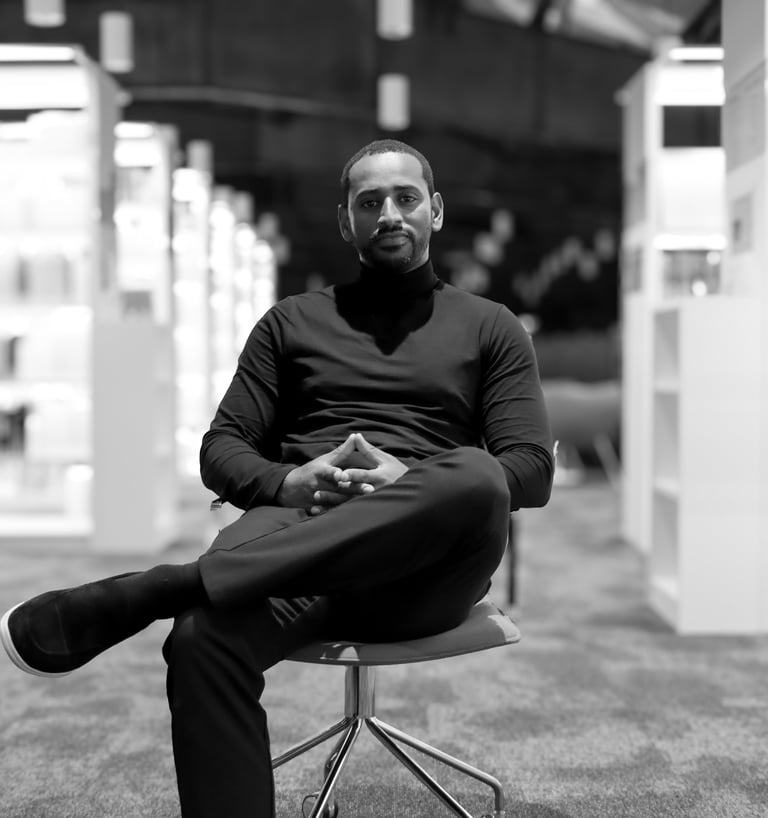
In applied settings, this philosophy translates into a strong emphasis on human-centered AI. Earlier in my career, I designed intelligent museum guidance and recommendation systems that supported visitor engagement across major European cultural institutions, including the National Gallery in London, as well as adaptive systems for collaborative robotics in industrial environments. Today, this experience informs my work on digital mental health interventions, where I design AI systems that assist clinicians, surface clinically relevant insights, and expand therapeutic possibilities without replacing professional expertise. I view AI not as an autonomous actor, but as a collaborative layer that must be designed with care, transparency, and responsibility.
Beyond research and system design, I am deeply invested in education and capacity building. I design and deliver training programs across multiple domains to build practical AI literacy, with a focus on helping professionals understand not only how to use AI systems, but when and where they should be surgically applied. I am not an advocate of AI as a universal solution. Instead, I take a deliberate and critical approach, identifying specific problem settings where AI can provide real value while recognizing that in complex and high-risk domains such as health care, human expertise must continuously guide, supervise, and contextualize algorithmic systems. Much of my current work is dedicated to bridging the gap between advanced AI research and responsible real-world professional practice.
Outside of my formal work, I am passionate about motorsport and photography. Motorsport feeds my appreciation for precision, dynamics, high performance, and human decision making under pressure & uncertainty. Photography, particularly in nature, sharpens my attention to pattern, light, time, and emotion, qualities that continue to influence how I think about intelligent systems and human experience. Check out some of my latest works here.
Contact Us


Reach out to discuss AI, brain interfaces, or digital art therapy projects.
Locations
Dr. Yilma's workspaces blend tech innovation with calm, creative environments.
HQ
123 Innovation Drive
Hours
9am–5pm
Lab
45 Brainwave Blvd
Hours
10am–6pm
Mon–Fri
Studio
78 Digital Art St